
Approach & Values
Every patient’s story is unique, and so is every care plan. My practice is built on respect and empathy, but also on a sincere curiosity on my part to figure out what is really going on. Patients have told me that my superpower is diagnostics, and I think what they are describing is something that has been part of my personality for as long as I can remember: I want things to make sense.
I want to know why one symptom showed up before another, why something suddenly changed after years of being stable, why a lab result doesn’t quite fit the rest of the picture, or why a treatment that should have worked didn’t. I tend to notice the odd little details that might seem unimportant at first, because sometimes that tiny symptom or seemingly unrelated piece of history turns out to be the clue that makes everything else fall into place.
Approach & Values
Every patient’s story is unique, and so is every care plan. My practice is built on respect and empathy, but also on a sincere curiosity on my part to figure out what is really going on. Patients have told me that my superpower is diagnostics, and I think what they are describing is something that has been part of my personality for as long as I can remember: I want things to make sense.
I want to know why one symptom showed up before another, why something suddenly changed after years of being stable, why a lab result doesn’t quite fit the rest of the picture, or why a treatment that should have worked didn’t. I tend to notice the odd little details that might seem unimportant at first, because sometimes that tiny symptom or seemingly unrelated piece of history turns out to be the clue that makes everything else fall into place.
I didn’t grow up planning to become a doctor.
Honestly, I grew up almost the opposite way. I was born in the Fort Worth area back when it was still quite rural living outside of town. My father was tough, gruff, fiercely independent, and very much of the opinion that expressing pain or emotion was a sign of weakness. Doctors also cost money we didn’t have, so unless something was really wrong, you didn’t go. You just got over it. If something was bleeding, maybe you considered getting help. Or maybe you rubbed a little dirt in it.
(Some of you know exactly the kind of childhood I’m talking about.)
There were certainly downsides to that philosophy, but it also gave me something I didn’t appreciate until many years later: I learned to trust my body. You hurt yourself and eventually you got better. You got sick and eventually you got better. I had injuries from rodeo in junior high and high school, some of which would probably have caused a more sensible child to reconsider her hobbies, and somehow this body of mine kept recovering.
Long before I knew anything about natural medicine, physiology, chiropractic, nutrition, or any of the things I would eventually spend my life studying, I had developed a basic faith that the body was designed to heal. I just didn’t have those words for it yet.
I thought whatever my body did was normal.
As a teenager, I was basically healthy and can't remember going to a doctor for much of anything, which certainly didn’t mean that everything was ideal. I had severe constipation, heavy bleeding with my periods, insomnia and low self-esteem. I was always just overweight enough to feel bigger than my girlfriends, although what I didn’t know then was that I had PCOS and unusually high testosterone that influenced the way my body developed.
And I was a dork. I didn’t fit in because I was a “cowgirl” in a high school that had become urban almost overnight. (I wasn't actually called a “cowgirl,” but the real high school name for the rodeo club isn't fit for public consumption here.)
I simply assumed all of this was normal because it was normal for me.
Some of it was almost comically explainable in hindsight. My mother made wonderful freshly brewed loose-leaf iced tea, and I would drink three or four big glasses of highly caffeinated tea throughout the evening, then lie awake unable to sleep. Nobody connected those dots, certainly not me. I just thought I was someone who couldn't fall asleep.
That experience has stayed with me professionally because we become accustomed to ourselves. We can live with something for five, ten or twenty years and eventually stop thinking of it as a symptom at all; it becomes “just the way I am.” Sometimes it is. Sometimes there is a reason worth finding.
My first experience with medicine left me with a question.
In my twenties, I finally went to a doctor because I was concerned about my weight. He prescribed Synthroid, I took one bottle and noticed absolutely nothing, and at my follow-up I told him it hadn’t done anything. It was only then that he explained I would need to take it for the rest of my life. I remember thinking, What?
I had absolutely no medical training at that point, but something about that didn’t make sense to me. What exactly were we fixing? I think I probably laughed or scoffed, maybe both. I said "no thank you" and didn’t take it again.
I didn’t know that question—What are we actually fixing?—would follow me throughout my career.
Not long afterward, medicine became much more personal when my mother developed leukemia, then lymphoma. Watching someone you love become seriously ill changes the way you see healthcare. From where I stood as her daughter, I saw enormous attention being paid to the disease and treating what was happening to her, but I didn’t see nearly as much attention being paid to making the person herself healthier. She died within three years of her diagnosis.
I don’t tell that story because I believe natural medicine could necessarily have saved my mother; I could never know that. I tell it because losing her changed the questions I was willing to ask. What makes a person healthy in the first place? What allows one body to recover while another struggles? What happens before disease becomes disease? What roles do nutrition, stress, environment, emotions, genetics, physiology, relationships and the way we live our lives actually play? And what does healing mean when curing is not possible?
Those questions became very real for me.
What's actually getting fixed?
And then the 1980s happened.
This was also the New Age era, with books and ideas everywhere about consciousness, spirituality, energy, meditation, the mind-body connection, and ways of thinking about health that were radically different from anything I had grown up with.
Some of it was undoubtedly ridiculous, and some of it changed my life. I was open-minded, but more importantly, I was curious. I wanted to know what was true, what actually worked, and what we might be dismissing simply because we didn’t yet understand it.
Around that same time, my back had begun hurting from those old rodeo injuries. I knew absolutely nothing about chiropractic care, but I knew I needed some relief, so I found a chiropractor who was on my insurance plan and whose office I could get to on my lunch hour. That was the entirety of my sophisticated research process.
Serendipitously, or perhaps not, this delightful chiropractor turned out to be a woman who practiced almost entirely with energy healing, with few conventional chiropractic adjustments at all. I found the whole thing fascinating, but fascination alone probably wouldn’t have changed the direction of my life. The important part was that I started getting results.
My back pain improved and I felt better overall, which absolutely lit up the analytical part of my brain. Why did this work? What exactly was happening? And, perhaps most intriguing of all, what else didn’t I know?
My curiosity became intense, and it happened to coincide with the fact that I was bored to tears with my career.
From computer systems to human systems
My first career was as a software analyst. On paper, and in my bank account, it was a perfectly respectable career, but in reality I was bored out of my mind. I was also working for a huge, faceless corporation where every morning I drove an hour through traffic so I could arrive at 8:00. Sometimes I arrived to discover there was absolutely nothing meaningful that needed to be done, but I had to be there at 8:00 because, well, it was 8:00. The whole thing began to feel pointless and soulless to me.
I had grown up in a family where independence was valued above almost everything else, and somehow I had created a life that gave me very little of it. Then my chiropractor told me about a local chiropractic college that had recently become accredited, and something clicked. I thought, I could do this.
In retrospect, I didn’t leave my first career as completely as I thought I did. The analytical part of my brain came right along with me, because computer analysis had allowed me to troubleshoot, find patterns, trace problems backward, recognize relationships, and keep looking when the obvious answer didn’t solve the problem. I just found the human body infinitely more interesting than a computer system.
That same way of thinking eventually became central to the way I practice. I want to know why one symptom appeared before another, what happened around the time something began to change, why a lab result doesn’t quite fit the rest of the picture, or why one treatment helped one problem but unexpectedly changed something else. I don’t necessarily assume that every odd detail matters, but I don’t like throwing one away simply because I don’t yet understand where it fits.
While patients have told me that my superpower is diagnostics. I think what they are really describing is my persistence in wanting the whole story to make sense. And my willingness to not know everything, and to listen.
Science, intuition, and the things that are harder to measure
My education has never stopped. Thousands of hours of continuing education have taken me through functional medicine, clinical nutrition, hormone health, gut health, acupuncture, herbs, homeopathy, chiropractic, physiology, emerging laboratory testing, and many other areas. But after decades of working closely with people, and through my own experiences with healing, I’ve also learned that not everything worth paying attention to is easily measured.
I have strong intuitive skills, and sometimes something about a case will catch my attention before I can fully explain why. Occasionally a connection occurs to me during meditation, and there have even been times when I’ve awakened from a dream with clarity about a patient or a diagnostic clue that I hadn’t consciously put together before.
I know how that sounds. Thirty-five years ago I might have been more hesitant to say it out loud, but today I’m quite comfortable with it. I don’t use intuition in place of science; I use it as another source of questions. If something pops into my mind that makes me wonder about a particular symptom, relationship, lab test or possibility, I honor that inner guidance.
An intuitive thought gives me another place to look, another question to ask, another possibility to investigate. Most of the time you’ll never even know any of this happened. You’ll simply notice I suddenly asked you that oddly specific question.
Becoming the kind of doctor I would trust
When I chose this path, I made a promise to myself that I wanted to become the kind of doctor I would trust with my own health, and more than three decades later that idea still guides me.
My education certainly didn’t end with my degrees. Thousands of hours of continuing education have taken me through functional medicine, clinical nutrition, hormone health, gut health, skincare from the inside out, acupuncture, herbs, homeopathy, chiropractic, physiology, emerging laboratory testing and many other areas. Over all those years, I’ve also had to change my mind plenty of times as better information came along. I can appreciate emerging science without assuming that everything old is obsolete. Mostly, I want to know what is useful and what makes sense for the individual person in front of me.
And I listen. Really listen, because after more than 35 years in practice, I’ve learned that patients often know something is wrong long before anyone has given them the language to explain it. They may not know exactly what is wrong, and sometimes the thing they are convinced is causing the problem turns out not to be the cause at all, but that doesn’t mean their observations should be dismissed. Sometimes they’ve been talked out of trusting what they know about themselves, and I never want to be the doctor who does that.
I highly recommend Dr. Mayfield. She is extremely compassionate and genuinely cares about each of her patients. She takes extra time to problem-solve and never leaves you feeling like there’s nothing that can be done for your health needs. She has worked very hard to help me get my life back after years of chronic illness that no one else seemed to be able to help me with.
- Sandra M.
Dr. Robin Mayfield is a miracle worker! I went to her as my very last hope. I’ve suffered from debilitating illness for 23 years. I only worsened the older I became and no matter the treatment I received from mainstream medicine.Within in 5 days of starting treatment with her I noticed a big change. It’s only improved as I go. I never dreamed I could feel this good. I am finally me. The people in my life are astonished at how amazing I am doing. I owe this woman my life. I never dreamed this could be possible.
- Heather M.
Why I still love what I do
After all these years, I’m still fascinated by the puzzle of the bodies we inhabit, including the physical, emotional, mental, spiritual, causal and etheric bodies. The same laboratory result can have very different significance in two different people because the person is not simply a collection of biomarkers. There is a history there, a physiology, a personality, genetics, habits, stresses, strengths, weaknesses and usually a few things that don’t fit neatly into any particular box. That’s the part I enjoy figuring out.
I love the moment when scattered symptoms that didn’t seem to have much to do with each other begin to line up into a map we can follow, and I love experiencing someone begin to understand their own body differently. There is something enormously satisfying about finally finding the thread that makes a confusing story make sense, especially when someone has been looking for that thread for a very long time.
More than three decades later, I’m still asking why, and I hope I never stop.
Experience
- Continuing Education Teacher for natural medicine doctors since 2006 Specializing in adrenal health, fibromyalgia, hormone balance, mood and anxiety, and the GI microbiome
- Holistic Healer & Chiropractor since 1991
- Focused on Chiropractic Nutrition and Functional Medicine since 1996
Education & Credentials
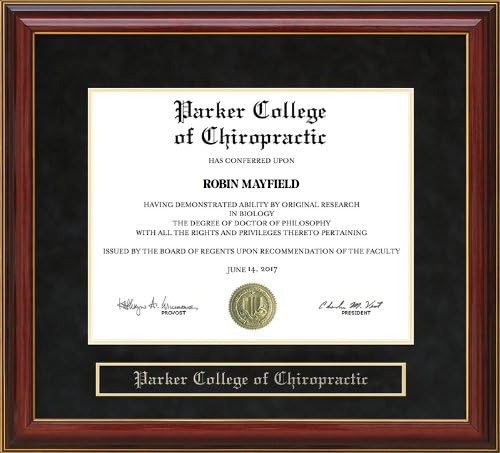
- Doctor of Chiropractic, Parker College of Chiropractic
- Certified Applied Clinical Nutritionist (ACN)
- Functional Nutritionist
- Women’s Naturopathic Endocrinology
- Licensed Acupuncturist
- Herbalist
- B.A. in Business & Psychology, Texas A&M University and B.S. in Anatomy
Clinical Insight + Intuition
Through personal healing and years in practice, I’ve come to trust both what can be measured — and what can be deeply felt.
My innate ability to recognize patterns and receive intuitive leaps is something I’ve nurtured over a lifetime. Sometimes, insights arise in quiet moments of meditation — even nightly dreams — revealing a diagnostic clue or solution concerning a specific patient.
This intuitive layer doesn’t replace science; they work together to go deeper. It’s one more tool I use to see you more fully and support your healing from all angles. Most of the time, you won't even know.
I've been working with Dr. Mayfield for about four years, through many changes happening externally in my life (moves, relationship changes, job changes, death of a parent) as well as internal changes (hormones, aging, stress, grief).
Through all of it, she's been there for me with her intelligence and knowledge, experience, intuition, and huge heart.
Dr. Mayfield is so gifted at keeping time with the constant changes I've been experiencing internally and externally, while adapting our approach and staying curious throughout, to help me restore and maintain a sense of wellness, mentally, emotionally, physically, and even spiritually.
I found Dr. Mayfield via recommendation from a good friend, for whom she's also made a huge positive impact, and I cannot recommend her strongly enough to others. She's been a pillar of stability in my life, all while helping me heal and be balanced and well.
- Rose Z.
Media, Teaching & Thought Leadership
Over the years, I’ve shared my insights and approaches through public speaking, teaching, and writing. Highlights include:
Published in Texas Journal of Chiropractic & Women's Networking Magazine

Guest Expert on KVUE Austin TV

Speaker at Women's Health Symposium
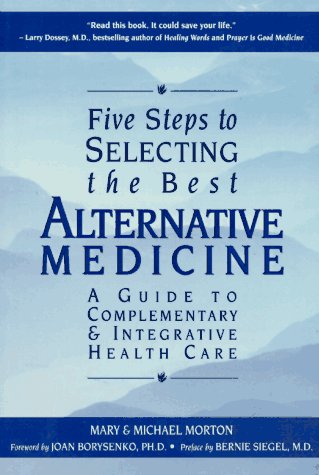
Featured in 5 Steps to Alternative Medicine Guide

Quoted in Good Life & Catyon Courier
I have been going to doctors for over 10 years desperately searching for the answers on how to fix my debilitating, and supposedly medically incurable, health issues. I’ve gone to conventional medical doctors, naturopaths, functional medicine doctors, chiropractors, nutritionists, acupuncturists, quacks – you name it, I’ve had an appointment with one. After just a few short months working with Dr. Mayfield I am experiencing a level of freedom and relief I had started to think wasn’t a possibility anymore. It’s nothing short of miraculous for me, someone who literally felt like a prisoner in their own body for years and years. I give all praise and glory to GOD for sending me the rescue I needed through Dr. Mayfield. The human body is designed to heal itself given the right conditions and Dr. Mayfield is smart enough to know to work with and within that design. Can’t say enough about how grateful I am for her!!!
- Shannon T.
After successful treatment for breast cancer (chemotherapy, surgery, radiation) in 2018, my oncologist prescribed Tamoxifen. This is a very difficult drug to take as it causes severe hot flashes and sleeplessness. After a year of suffering through both, I found Dr. Mayfield. As it turns out, she was familiar with the nutritionist I was using. By changing the order of my supplements, adding a few additional ones as well as homeopathic remedies, she calmed and cooled my body. I now sleep through the night and have a few minor hot flashes. This has been absolutely life-changing for me!
Dr. Mayfield is a kind and knowledgeable practitioner who has given me my life and my sanity back! She is amazing.