
I don’t look at your health through only one lens.
Most patients who find their way to me have already tried the obvious things. They’ve seen many doctors. They may have worked with functional medicine practitioners, holistic providers, coaches, or other natural healers. They’ve had unusual labs run, read everything on the web, gone down every rabbit hole, and diagnosed themselves six ways from Sunday.
Some have tried medications, supplements, diets, hormones, gut protocols, parasite cleanses, lowering cortisol, or whatever the latest health trend happens to be.
And still, symptoms linger. Something isn't right. That is usually where my work begins.
I don’t look at your health through only one lens.
Most patients who find their way to me have already tried the obvious things. They’ve seen many doctors. They may have worked with functional medicine practitioners, holistic providers, coaches, or other natural healers. They’ve had unusual labs run, read everything on the web, gone down every rabbit hole, and diagnosed themselves six ways from Sunday.
Some have tried medications, supplements, diets, hormones, gut protocols, parasite cleanses, lowering cortisol, or whatever the latest health trend happens to be.
And still, symptoms linger. Something isn't right. That is usually where my work begins.

The Mayfield Method is not a rigid protocol, a canned program, or a fancy name for giving everyone the same list of supplements.
It is the way I have learned to think after more than 35 years of listening to patients, studying different systems of healing, and watching how the body tells its story.
Not a protocol. A way of seeing.
What I refer to as The Mayfield Method wasn’t created in a weekend with a whiteboard and a marketing plan.
It is simply the name I now use for the way my work has evolved over decades of practice, study, intuition, and listening closely to people whose symptoms did not fit neatly into one category of care.
Your body has a history. Your symptoms have a sequence. Your stress has a cost. Your injuries, hormones, digestion, emotions, sleep, environment, toxic burden, and life experiences all matter.
Over decades of practice, I kept learning new things because the things I already knew weren’t always enough. One discipline would answer questions another one couldn’t. A patient would get better in a way that made me rethink what I thought I understood. Something I had dismissed years earlier would suddenly make sense in light of something I learned later. And patients themselves kept teaching me that bodies do not particularly care about the categories we have created for studying them.
Eventually I realized that the thing tying all of this together wasn’t any particular treatment or philosophy. It was the way I approached the problem.
I do not believe in reducing you to a lab result, a diagnosis, or a standardized cookbook protocol. I want to understand the whole picture.
More than functional medicine
 We can become so focused on finding the perfect lab test, biochemical pathway, supplement, medication, nutrient deficiency, or gut protocol that the patient once again becomes a collection of numbers and pathways rather than a whole human being. It may be a more natural box, but it is still a box. (And I have never been very good at staying in boxes.)
Over the years, my own education has taken me through a rather remarkable number of them. I began as a chiropractor, which taught me to think about structure, movement, compensation patterns and kinetic chains; how something happening in one part of the body can create a problem somewhere else entirely.

From there, my studies expanded into clinical nutrition and functional medicine, acupuncture and Chinese medicine, Ayurveda, homeopathy, herbal medicine, bioidentical hormones, and mind/body medicine. Along the way there have also been decades of spiritual inquiry and personal growth, which have made me unwilling to automatically dismiss the emotional, intuitive, or body/mind/spirit aspects of illness simply because they are harder to measure.
That is a lot of different ways of looking at a human being. And I think that matters.
Functional medicine helps me think about chemistry, hormones, digestion, inflammation, nutrients and laboratory findings.
Chiropractic makes me look at structure and relationships within the physical body.
Chinese medicine gives me an entirely different map of relationships.
Ayurveda asks me to consider constitution and why two people with what appears to be the same problem may need very different things.
Homeopathy makes the peculiar little details important. Other systems ask other questions.
And sometimes the emotional or spiritual piece changes the physical picture in ways we can see not only in how someone feels, but even in symptoms and laboratory findings.
After all these years, I don’t believe any one of them owns the truth.
I think of them as maps. Each can show me something the others may not, and the value of having studied so many of them isn’t that I can throw ten different kinds of treatment at you. Quite the opposite. It means that when one explanation doesn’t make sense, I don’t necessarily have to keep trying to make you fit it.
Sometimes the functional medicine explanation is exactly what we need. Sometimes structure changes the entire picture. Sometimes an old Chinese medicine pattern makes me notice a relationship I hadn’t considered. Sometimes the odd little symptom that looks insignificant through one lens becomes quite interesting through another.
The question is not, “Which system do I believe in?”
The question is, “Which way of looking at this helps me understand you?”
The things that don’t fit
One of the mistakes we make in healthcare is assuming that the loudest symptom must be the most important one. Sometimes it is. But sometimes the thing that sounds almost incidental turns out to be the clue that changes the whole picture.
That is why I want to know what started first, what changed, what keeps repeating, what helped a little, what made things worse, and what nobody else seemed particularly interested in. I especially want to know what you almost didn’t tell me because you thought it sounded too weird.
For the record, “too weird” is often clinically useful.
So I look for the connections. Sometimes the clue is in a lab result. Sometimes it is in the sequence of events. Sometimes it is the odd symptom that nobody thought mattered. Sometimes it is something you mention almost as an afterthought. And sometimes we discover that the thing everyone has been chasing isn’t really where the story began at all.
The body has been adapting for your entire life, and it doesn’t always organize the evidence neatly for us. So when something doesn’t fit, I don’t necessarily want to discard it. I want to know why it doesn’t fit.
And sometimes the most important thing I can do is put all the lenses down and simply listen.
I've been working with Dr. Mayfield for about four years, through many changes happening externally in my life (moves, relationship changes, job changes, death of a parent) as well as internal changes (hormones, aging, stress, grief).
Through all of it, she's been there for me with her intelligence and knowledge, experience, intuition, and huge heart.
Dr. Mayfield is so gifted at keeping time with the constant changes I've been experiencing internally and externally, while adapting our approach and staying curious throughout, to help me restore and maintain a sense of wellness, mentally, emotionally, physically, and even spiritually.
I found Dr. Mayfield via recommendation from a good friend, for whom she's also made a huge positive impact, and I cannot recommend her strongly enough to others. She's been a pillar of stability in my life, all while helping me heal and be balanced and well.
- Rose Z.
Who this is for
If your case is simple, you may not need this kind of work.
But if your symptoms are persistent, confusing, dismissed, or tangled together like Christmas lights pulled out of a box in July, another standard protocol may not be what you need. You may need someone who is willing to keep asking questions when the first answer doesn’t explain enough, who can move between different ways of understanding the body without needing to make you fit any one of them, and who is genuinely interested in the odd piece that everybody else keeps setting aside because it doesn’t belong in the picture.
I am probably not the right doctor for someone who wants a five-minute visit and a protocol they could have downloaded from the internet. But if you are tired of being dismissed, tired of being told everything is normal when you know you don’t feel normal, or simply tired of trying to assemble all these pieces on your own, this is the work I love most.
The Mayfield Method is how I connect the dots, decide which dots actually matter, and look for the story underneath the symptoms.
Because after all these years, the question underneath my work is still remarkably simple:
What's actually getting fixed?
Trusted by 1,500+ women over 35 years. Licensed holistic functional health doctor based in Austin, TX, and available nationwide
Media, Teaching & Thought Leadership
Over the years, I’ve shared my insights and approaches through public speaking, teaching, and writing. Highlights include:
Published in Texas Journal of Chiropractic & Women's Networking Magazine

Guest Expert on KVUE Austin TV

Speaker at Women's Health Symposium
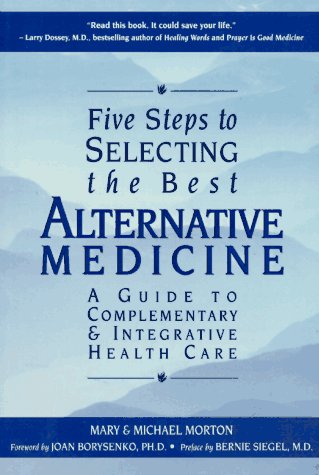
Featured in 5 Steps to Alternative Medicine Guide

Quoted in Good Life & Canyon Courier
Brain fog got so bad I almost couldn't function after my baby's birth. Hard to tell if I was depressed or just low energy making me feel that way, or maybe it was both. Found out I was making cortisol but not using it - adrenal fatigue! But when adrenal support didn't fix it all, she brought in a homeopathic that broke through the plateau. I don't know of another doctor with this many tools in her doctor bag. If you aren't getting answers from standard medical tests, run don't walk to Dr. Mayfield!
- Ann S.
After successful treatment for breast cancer (chemotherapy, surgery, radiation) in 2018, my oncologist prescribed Tamoxifen. This is a very difficult drug to take as it causes severe hot flashes and sleeplessness. After a year of suffering through both, I found Dr. Mayfield. As it turns out, she was familiar with the nutritionist I was using. By changing the order of my supplements, adding a few additional ones as well as homeopathic remedies, she calmed and cooled my body. I now sleep through the night and have a few minor hot flashes. This has been absolutely life-changing for me!
Dr. Mayfield is a kind and knowledgeable practitioner who has given me my life and my sanity back! She is amazing.